
Case Study Corner: The FIFA World Cup 2026: Where is the geography?
Stefan Carron is a Subject Development Lead at Teach First

Football is one of those few sports that can be considered global. There is no better manifestation of this than the World Cup. This month the 23rd edition of the men’s tournament begins, the first to feature 48 teams and three host countries: Canada, Mexico and the United States (Figure 1).
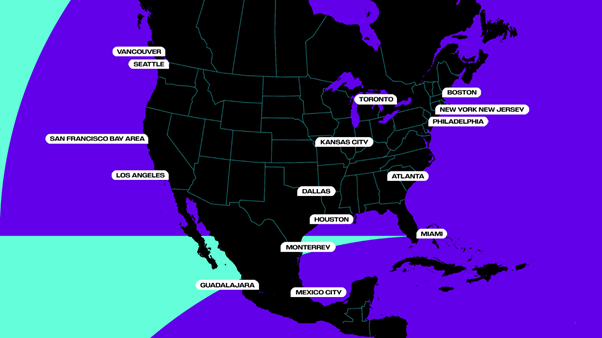
Figure 1: Map showing the 16 cities where games will be played between 11 June and 19 July 2026. Source: FIFA, 2026
As excitement for this festival of football grows, and the action begins on the pitch, Storey (2011) reminds us that sport can be a useful mechanism for engaging pupils with key geographical concepts. Messi, Ronaldo, Kane and others, may have eyes on the glory, as well as the headlines over the coming month, but the World Cup also demonstrates the relevance and importance of geography in the modern world - an opportunity teachers could recognise in classrooms.
Why does the World Cup matter to geographers?
The World Cup is a mega sporting event and a clear example of globalisation, providing a lens through which to understand relationships within global society (Giulianotti, 2019). Flows of people, capital and media show how the world is interconnected, but often in uneven ways. Take, for example, flows of people. The 2022 World Cup in Qatar attracted over one million international visitors (IMF, 2024), temporarily increasing the population of the host nation by a significant margin. Fans travelled from across the world, illustrating the extent to which the tournament brings people together, connecting places through a shared experience. These highly visible movements sit alongside less visible, but equally important, flows. Migrant workers form over 91% of Qatar’s population (Human Rights Watch, 2025) and were heavily involved in constructing the stadia and infrastructure required to host the tournament. The contrasting mobilities, affluent, short term fan travel versus economically driven, longer-term migration, reveal the uneven geographies that underpin such global sporting events and are of interest to geographers.
For geographers, the World Cup is far more than football plus maps and a legitimate domain of academic enquiry. This becomes even more apparent when considering sustainability and environmental impact. The travel-related emissions and resource use highlight tensions between global connectivity and environmental sustainability. Indeed, FIFA’s claim that the 2022 World Cup was climate or carbon neutral, was criticised by environmentalists as ‘dangerous and misleading’, underestimating emissions and a lack of credibility in its offsets (BBC, 2023).
Furthermore, questions of place and space emerge through the selection of host cities and the way they are represented to a global audience, often reflecting narratives of modernity, culture and progress. As Roberts (2006) notes, ‘host countries know that they will be in the global spotlight’, so will give ‘serious attention to how it presents itself to the world’. A key part of this is the use of mascots and what they stand to represent. According to FIFA, Zayu the Jaguar, from the jungles of southern Mexico, symbolises cultural celebration and connection, embracing Mexican culture through dance, food and tradition, uniting people across borders with passion and pride (FIFA, 2026).
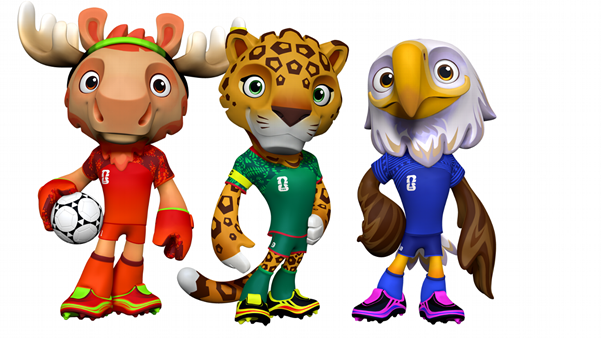
Figure 2: The three official mascots for the 2026 FIFA World Cup. From left to right: Maple, Zayu and Clutch. Source: ESPN, 2026
Beyond representation, the World Cup is important in political geography as a tool of soft power. Countries have previously used the tournament to shed lingering stereotypes (e.g. Germany, 2006), highlight ambitions as a sports hub (e.g. Qatar, 2022) and show their emergence as an economic and political powerhouse (e.g. South Africa, 2010, Brazil, 2014). However, an enquiring geographer doesn’t need to look far to notice criticism. Visible domestic protests in Brazilian cities prior to the 2014 tournament were due to concerns over the cost of hosting the tournament (Figure 3), and more recently accusations of ‘sportswashing’ followed the Qatar 2022 World Cup (Gutmann, 2024). This demonstrates that the World Cup is a deeply contest geopolitical tool, where attempts to project power are often met with scrutiny and resistance.
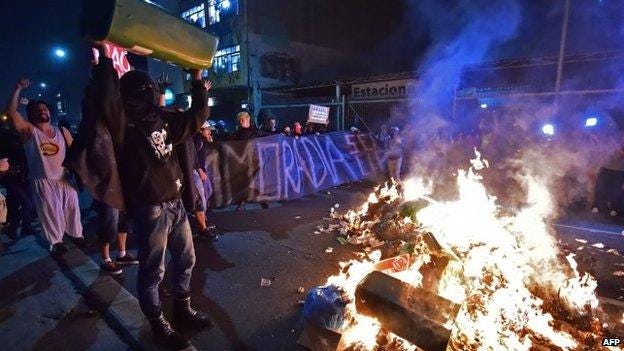
Figure 3: Protests on the streets of Sao Paulo, Brazil 2014. Source: BBC, 2014
The FIFA World Cup 2026: What could geography teachers point their students to?
The scale of this years World Cup is interesting. Three countries, hosted by 16 North American cities, across three time zones, compares starkly with the compact nature of the Qatar 2022 World Cup. Surprisingly though, not as many miles will be travelled in this year’s tournament as the 2014 Brazil World Cup, where the dispersed hosting strategy meant that on average teams travelled 7,054 miles, compared to the 5,146 miles average in 2026 (Steiner, 2026). In classrooms, using GIS software to create placemarks, draw lines, measure distance and toggle layers showing information such as time zones, uncovers the scale of this year’s edition and can be a valuable way of interpreting team performance (Figure 4).
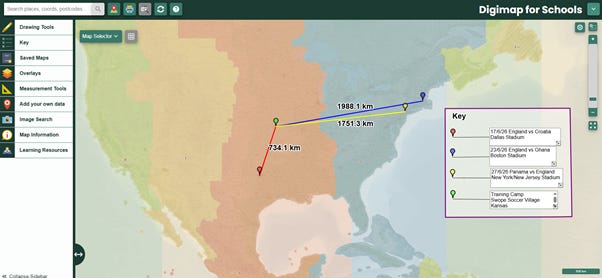
Figure 4: Digimap (https://digimapforschools.edina.ac.uk/) map showing England’s training base in Kansas and straight-line distances to their group-stage venues, with time zones displayed.
Due to the expanded tournament this year, and the absence of low-carbon alternatives to air travel, it is widely expected that the 2026 World Cup will be the most ‘climate damaging’ tournament in history. According to the New Weather Institute (2025), the tournament will be responsible for at least 9.0 million tonnes of carbon dioxide equivalent (CO2e). This contrasts with an average of 4.7 million tonnes of carbon dioxide equivalent for the previous four Finals (2010-2022). To help our pupils understand these figures, it is important teachers put this into context, otherwise the data can feel meaningless. A useful website is the ‘Greenhouse Gas Equivalencies Calculator’ which can convert data into something more concrete. For example, 9 million tonnes of carbon dioxide equivalent is approximately equal to the annual electricity-related emissions of around 1–2 million homes in the United States, or roughly two coal-fired power plant operating for a year (U.S. Environmental Protection Agency, n.d.). Figure 5 shows how much carbon dioxide equivalent per person would be generated if Scotland, England or South Africa reach the final.
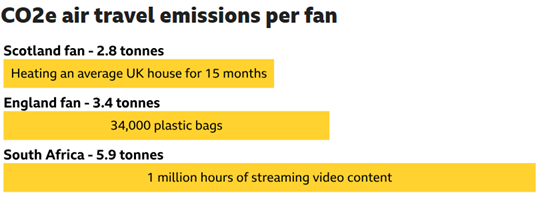
Figure 5: CO2e air travel emissions per fan. Source: Thrust Carbon found in BBC, 2026
Considering carbon targets, these emissions are worrying. However, each host city was required to produce a formal sustainability plan, and as ever geography teachers have a responsibility to provide a balance to discussions on environmental impacts. For example, see here for Vancouver’s sustainability plan, which includes prioritising composting sustainable fabrication and eco-friendly transportation. Figure 6 shows the top five cities when it comes to prioritising sustainability at the 2026 World Cup. Many geography departments may use Mexico City as an urban case study found in a Newly Emerging Economy (NEE) at GCSE. Its inclusion among the top five cities for sustainability measures highlights the significant improvements made to urban living (LATAM Mobility, N.d) both in preparation for the tournament and as part of longer-term development goals.
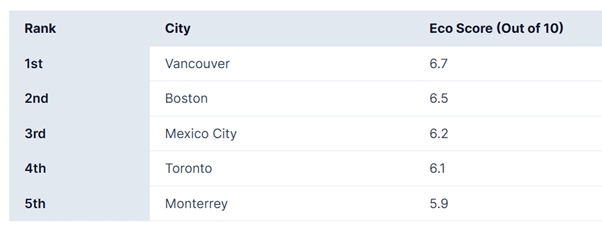
Figure 6: Host cities eco scores. Source: World Sports Network, 2026
From an economic perspective, the 2026 FIFA World Cup provides a useful lens through which pupils can explore the uneven and multi-scalar impacts of global mega events. Globally, the tournament is projected to generate around $40 billion in economic output and support hundreds of thousands of jobs, demonstrating the scale of economic flows associated with international sporting events (FIFA, 2025). At the national and city scale, benefits are expected to be concentrated in sectors such as tourism, hospitality, transport and retail, with host cities across Canada, the USA and Mexico experiencing short-term boosts in spending and employment, alongside longer-term investment in infrastructure and urban development (North America Outlook, 2026). However, while these headline figures appear significant, the overall macroeconomic impact for large economies remains relatively modest, estimated at only around 0.05% GDP growth in the USA and 0.1–0.2% in Mexico, demonstrating that gains are often localised and temporary rather than transformative (Natixis, 2026; Statista, 2026). This creates an opportunity for geography teachers to engage by asking, ‘Who really benefits from hosting a mega-event?’ or by constructing cost–benefit analyses that weigh economic gains against public spending, allowing pupils to critically evaluate whether the World Cup represents sustainable economic development.
In recent weeks, squad lists of the participating teams have been submitted to FIFA. Amongst the debates over who should be boarding the plane to the tournament, a fascinating insight into the demography of certain nations emerges. For example, the Japanese national team reflects a society that is becoming increasingly multicultural, with players such as US born goalkeeper Zion Suzuki, of Ghanaian and Japanese heritage (Orlowitz, 2025). Similarly, Morocco’s squad highlights the significance of the diaspora in shaping national identity (Al Jazeera, 2026), with many players born or developed in European countries (Figure 7). Migration and transnational connections in modern football are significant, however, who can be a part of the tournament can often be the result of geopolitics. Travel restrictions mean fans from Haiti may be unable to enter the USA to support their team, with the US Department of State, confirming no special exceptions would be made for fans without existing US visas (Guardian, 2026). These socio-political threads show that the World Cup offers geography teachers multiple entry points to engage pupils with contested and complex ideas that are central to the discipline of geography.
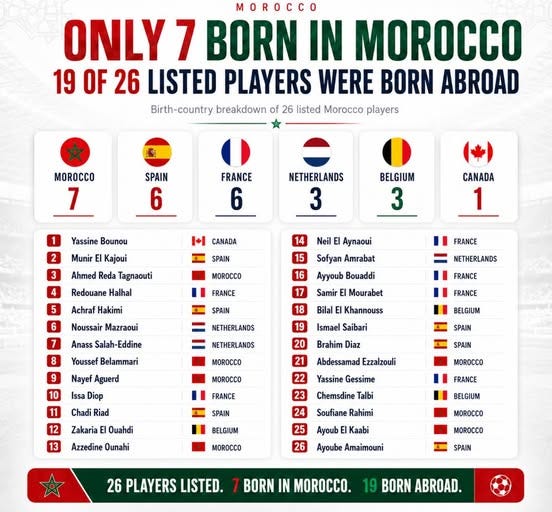
Figure 7: Morocco’s Squad List for the FIFA World Cup 2026
The Final Whistle
The threads highlighted in this piece are not exhaustive and it is highly plausible that stories and questions, geographical in nature, appear throughout the tournament. Geography is dynamic, contested, complex, and inherently relevant to the lives of young people and the World Cup is a perfect opportunity to demonstrate this. If pupils can analyse the World Cup geographically, what other global spectacles might they be able to interrogate in the same way?
The World Cup is also positioned towards the end of an academic year where disunity has been visible in communities up and down the country. Whilst it is unlikely to make deep rooted national and local issues go away, the World Cup is a celebration of sport that brings joy to many people and a togetherness that not many other events can do, illustrating how shared global events can shape a sense of place, identity and connection across different communities. What a brilliant opportunity that geography teachers could lean in to and lead within school communities!
Enjoy the tournament and may the best team win.
About the Author:
Stefan Carron is a Subject Development Lead in Geography at Teach First, working with early career teachers to build secure subject knowledge, thoughtful curriculum understanding, and effective classroom practice.
With over a decade of experience teaching Geography in high‑achieving secondary schools across London, Stefan brings strong classroom insight and a track record of curriculum leadership. As a former Lead Practitioner, he specialised in developing early career teachers and designing ambitious, knowledge‑rich Geography curricula.
In 2024/25, Stefan was selected for the prestigious UCL Fawcett Fellowship, further strengthening his expertise in curriculum design, subject knowledge development, and teacher education. He is passionate about empowering new teachers to thrive and ensuring all young people have access to a high‑quality Geography education.
References
Al Jazeera (2026) Hakimi leads nine returning Morocco players from Qatar 2022 at World Cup. Available at: https://www.aljazeera.com/sports/2026/5/27/hakimi-leads-nine-returning-morocco-players-from-qatar-2022-at-world-cup (Accessed: 1 June 2026).
BBC (2014) Brazil World Cup: Protests erupt in São Paulo. Available at: https://www.bbc.co.uk/news/world-latin-america-27423404 (Accessed: 1 June 2026).
BBC (2023) Qatar World Cup carbon neutrality criticised. Available at: https://www.bbc.co.uk/sport/football/65834022 (Accessed: 1 June 2026).
BBC (2026) World Cup 2026 travel emissions and impact. Available at: https://www.bbc.co.uk/sport/football/articles/cr5l1nq3d6ro (Accessed: 1 June 2026).
Digimap for Schools (n.d.) Digimap for Schools. Available at:
https://digimapforschools.edina.ac.uk/
(Accessed: 1 June 2026).
ESPN (2026) Who are the 2026 FIFA World Cup mascots? Available at: https://www.espn.co.uk/football/story/_/id/46377619/who-2026-fifa-world-cup-mascots-maple-zayu-clutch (Accessed: 1 June 2026).
FIFA (2026) FIFA World Cup 2026 mascots. Available at: https://www.fifa.com/en/tournaments/mens/worldcup/canadamexicousa2026/mascots (Accessed: 1 June 2026).
FIFA (2025) FIFA-WTO study estimates economic output. Available at: https://inside.fifa.com/organisation/media-releases/fifa-wto-study-estimates-usd-47-billion-economic-output-from-fifa-club-world (Accessed: 1 June 2026).
Giulianotti, R. (2019). Football events, memories and globalization. Soccer & Society, 20(7–8), 903–911. Available at: https://www.tandfonline.com/doi/abs/10.1080/14660970.2019.1680490 (Accessed: 1 June 2026).
Guardian (2026) Haiti World Cup 2026 team guide. Available at: https://www.theguardian.com/football/2026/may/30/haiti-world-cup-2026-team-guide (Accessed: 1 June 2026).
Human Rights Watch (2025) World Report 2025: Qatar. Available at: https://www.hrw.org/world-report/2025/country-chapters/qatar (Accessed: 1 June 2026).
IMF (2024) Selected Issues Paper: Qatar. Available at: https://www.imf.org/-/media/files/publications/selected-issues-papers/2024/english/sipea2024011.pdf (Accessed: 1 June 2026).
LATAM Mobility (n.d.) Sustainable mobility in Mexico City. Available at: https://latamobility.com/en/sustainable-mobility-in-cdmx-changes-ahead-of-the-2026-world-cup/ (Accessed: 1 June 2026).
Natixis (2026) Beyond the game: The economics of the 2026 FIFA World Cup. Available at: https://home.cib.natixis.com/articles/beyond-the-game-the-economics-of-the-2026-fifa-world-cup (Accessed: 1 June 2026).
New Weather Institute (2025) FIFA’s climate blind spot. Available at: https://www.newweather.org/wp-content/uploads/2025/07/FIFAs_climate_blind_spot.pdf (Accessed: 1 June 2026).
North America Outlook (2026) FIFA World Cup 2026: An economic opportunity for Canada. Available at: https://www.northamericaoutlookmag.com/expert-eye/fifa-world-cup-2026-an-economic-opportunity-for-canada (Accessed: 1 June 2026).
Orlowitz, D (2025) An increasingly multicultural Japan has qualified for the 2026 World Cup. Available at: https://www.theguardian.com/football/2025/mar/20/an-increasingly-multicultural-japan-has-qualified-for-the-2026-world-cup (Accessed: 1 June 2026).
Statista (2026) Economic impact of the FIFA World Cup. Available at: https://www.statista.com/chart/36264/economic-impact-of-the-fifa-world-cup/ (Accessed: 1 June 2026).
Steiner, T. (2026) How far every team will travel at the 2026 World Cup. Available at: https://www.si.com/soccer/how-far-every-team-travel-2026-world-cup-group-stage-ranked (Accessed: 1 June 2026).
Storey, D. (2011) Sport and geography. Available at: https://portal.geography.org.uk/downloads/journals/TG_SUM_2011_STOREY.pdf (Accessed: 1 June 2026).
U.S. Environmental Protection Agency (n.d.) Greenhouse gas equivalencies calculator. Available at: https://www.epa.gov/energy/greenhouse-gas-equivalencies-calculator#results (Accessed: 1 June 2026).
Vancouver FWC26 (2026) Sustainability plan. Available at: https://vancouverfwc26.ca/fifa-fan-festival/sustainability (Accessed: 1 June 2026).
World Sports Network (2026) 2026 World Cup host cities ranked by sustainability. Available at: https://www.wsn.com/blog/2026-world-cup-host-cities-ranked-sustainability/ (Accessed: 1 June 2026).
Roberts, M. (2006) World Cup Challenge. Teaching Geography, 31 (60-62) Available at: https://portal.geography.org.uk/journal/view/J002769 (Accessed: 1 June 2026).
PMC (2024) Sportswashing and global sport politics. Available at: https://pmc.ncbi.nlm.nih.gov/articles/PMC11329124/ (Accessed: 1 June 2026).